
After a week’s hiatus, I am back to share my thoughts on media ownership! The presentation last week went well and I’ve gained multiple insights from other groups presentation too 🙂 With a clearer head, be prepared for a reflective write-up where I’ll touch on Government versus Private-owned media and finally my stand on who should ultimately own the media of Singapore! Enjoy!
~ Government owned ~
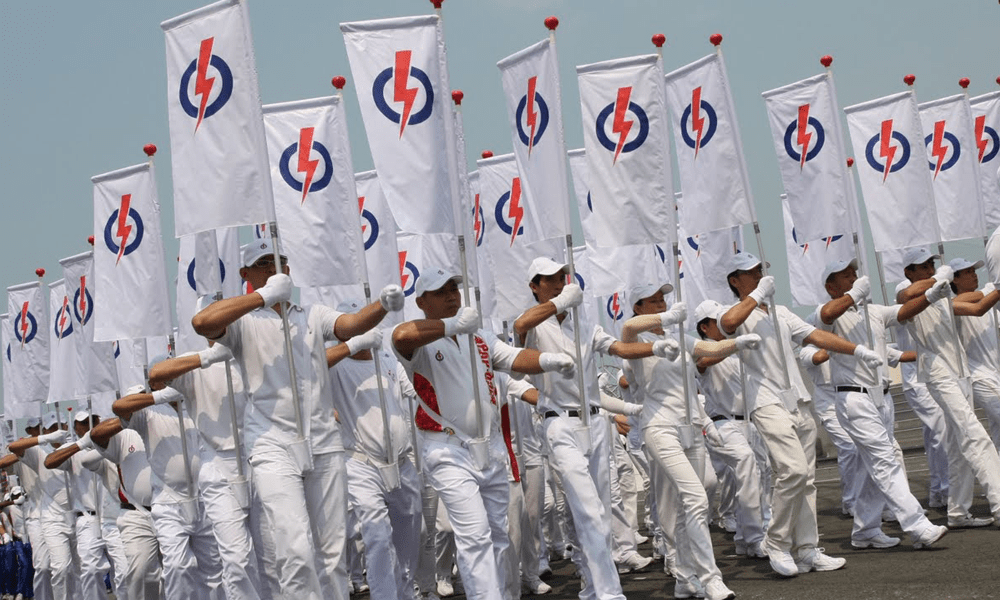
My thoughts on government owned
Many might argue that they do not support government owned media as they are afraid that the disseminated information might be infused with propaganda tactics. Luckily for us Singaporeans, we are well governed with the lowest cases of corruption in the world. And yes, the media does contain ‘pro-government’ intentions, but more importantly to me is how the audience processes the information. In the 21st century, people are more critical with information that they see and might source out alternative sources before coming to a agreement. I can say the media in Singapore is quite regulated as compared to China or North Korea where the information is completely tainted to only praise the government and the citizens have restricted access to the internet.
Example on extreme government control
Detaining Uyghur Muslims in ‘re-educational camps’

China deemed Ugyhur Muslims as ”extremist” or with politically incorrect views and this might pose a threat to China government. Hence, to eliminate Islam as a whole in china the Muslims brainwashed to reduce their ability to think critically. The Muslims are given pork to eat and forced to sing China’s national anthem as well as learn Chinese.
~ Private owned media ~
Unfortunately, there is no private media in Singapore.
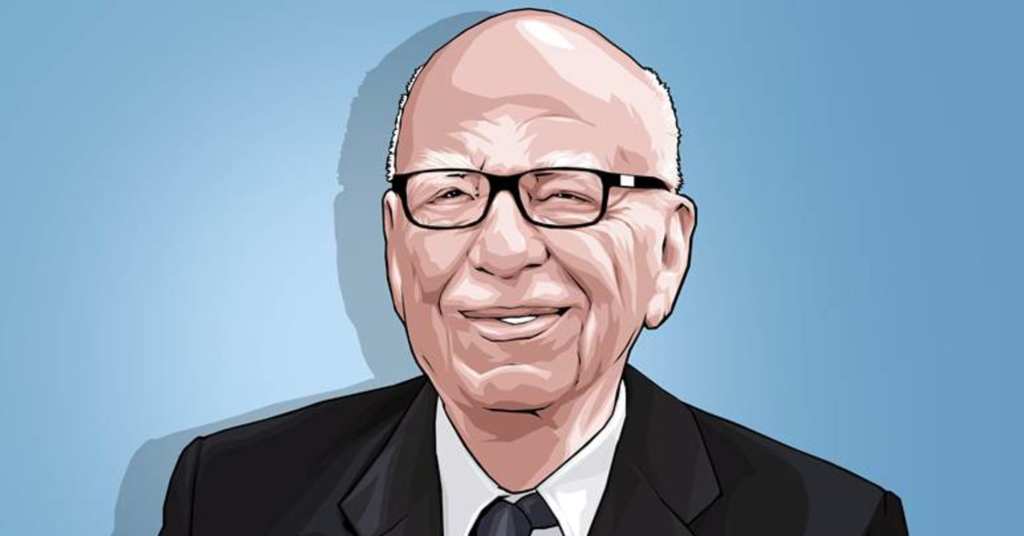
An example of private owned company that controls the media would be Rupert Murdoch, a editor who founded News Corp. Murdoch had a business mindset, and to keep his newspaper and media industry interesting, he increased sports and scandal coverage and adopted eye-catching headlines.
My thoughts on private owned
Private owned media might appeal to people as there is no censorship imposed, however I find that pretty scary.
The power lies within the editor of the company and we might not know whether the news published is reliable or not. Most business man like Murdoch prioritizes on making more profits and expanding the company. Hence it is questionable what tactics they might adopt to achieve their agenda of hitting the sales.
FINAL THOUGHTS
Growing up where media is controlled by the government, I ultimately support government owned media in Singapore.
Even though the media is controlled by the government, there is free media for me as a platform to express my thoughts on social media freely without much restriction. There is still freedom in the kinds of media that I choose to use too. (Netflix, Facebook, Twitter, Youtube)
All in all, I am just happy and blessed that the government does not impose strict censorship on the Singapore media. Singaporeans do have the freedom to have different religions and their own views. Analysis of information critically is also taught in schools to train younger Singaporeans, hence having government owned media would not bring much of a problem if the audience is objective with the media.
Thank you for staying through, this post might be fairly lengthy, but I hope you will see where I am coming from!
See you guys on the next one, cheers to the weekend! 🙂
References
- Bayance. (2020). Let’s Get Real: Oppression of Muslim Uighurs in China ft. AqsaSaysWhat. [online] Available at: https://bayance.wordpress.com/2019/08/19/lets-get-real-oppression-of-muslim-uighurs-in-china-ft-aqsasayswhat/ [Accessed 20 Feb. 2020].
- D’Amico, S. (2019). Why is China Persecuting the Uyghur People?. [online] MIR. Available at: https://www.mironline.ca/why-is-china-persecuting-the-uyghur-people/ [Accessed 20 Feb. 2020].
- Illustration of Rupert Murdoch. (2020). [image] Available at: https://fm.cnbc.com/applications/cnbc.com/resources/img/editorial/2014/04/10/101572730-rupert-murdoch-illustration.1910×1000.jpg [Accessed 20 Feb. 2020].
- Redwire Singapore (2020). People’s Action Party wins electoral-majority using laws and bans. [image] Available at: https://www.bing.com/images/search?view=detailV2&ccid=jEs76RD4&id=5436C9AD00FA3BE4B9A826B1B7A0087CDE8391F4&thid=OIP.jEs76RD48I6a27UUqoAiDAHaEc&mediaurl=https%3a%2f%2fredwiretimescom.lightningbasecdn.com%2fwp-content%2fuploads%2f2019%2f01%2fredwire-singapore-pap-national-day-x84.png&exph=600&expw=1000&q=singapore+government+pap&simid=608046727267876960&selectedIndex=2&ajaxhist=0 [Accessed 20 Feb. 2020].
 Angelina's blog


Hi Angel, This is a short but good post. Your post had information that I didn’t know of. That is the extreme government control in China. I was disheartened after reading that. Validity lying in the trust worthiness of the source is a fact. In that case government owned media will be the most efficient way to get factual information.
Your point is clear and elaborated. Simple structure of post and proper paragraphing has made this post easy to read. I would frankly read a shorter blog and gain content then reading a long post 😋.
Eager to read more of your posts. All the best for your upcoming posts!
LikeLike
Heyo Angel,
Post is short but gets to the point. The first picture of the matching flag party og the PAP is scarily similar to what you see in other countries. Maybe our nation really isn’t as free as we thought it is.
As Singapore lacks true private it may be hard to imagine what the country would be like, but ultimately I agree with your conclusion that Singapore’s media should remain a government controlled one. The vast amount of resources, facilities and services they provide is unmatched. Without monetary incentive they also do not need to make unnecessary headlines that attracts viewership.
LikeLike
Hey Angel!
I agree that even though the government owns the present media in Singapore, the new media that we have still allow us the freedom to voice our opinion or thoughts (but maybe not on everything). Unfortunately, government-owned media are not the same in other countries like China or North Korea as you have mentioned. Other than the propaganda filled mainstream media that they televised to their citizens, media platforms such as Facebook and Youtube were banned in China and North Korea.
Your post made me reflect on how grateful we are to be in Singapore to be allowed to exercise our freedom to consume our media according to our needs.
LikeLike